5 Signs Your Suspension Needs a Check-Up
Your suspension system does far more than smooth out bumps. It keeps your tires planted on the road, your steering predictable, and your braking stable — which makes it a core part of how safely your vehicle handles every single day. Because suspension parts wear gradually, the warning signs are easy to miss until something feels clearly wrong.
Here are the five most common signs it's time for a suspension check-up, what each one usually means, and when you should have it inspected.
Why Your Suspension Matters
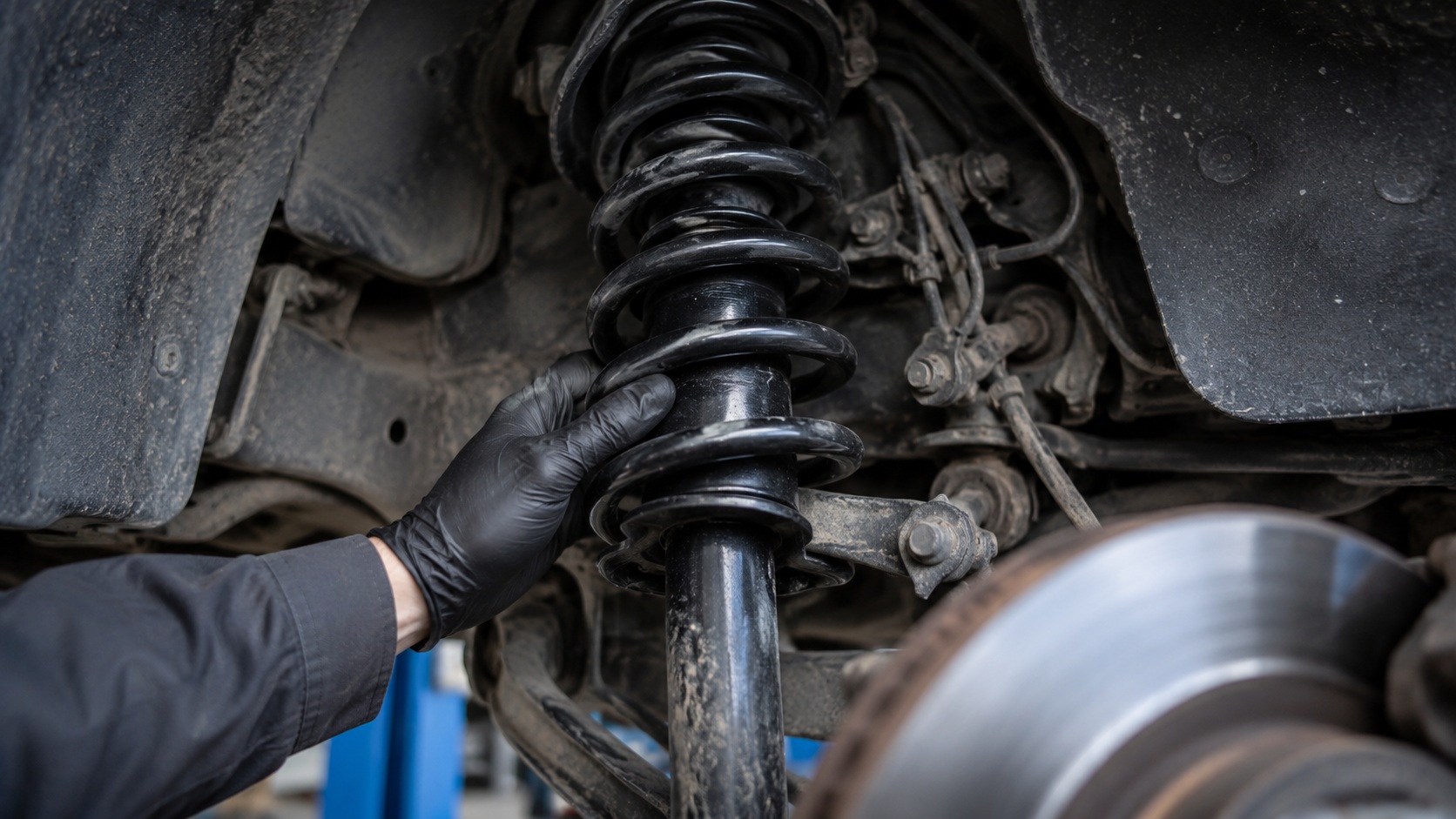
Shocks, struts, springs, control arms, and bushings all work together to absorb road impacts and keep your tires in constant contact with the pavement. When any of these components wear out, your ride quality drops — but more importantly, so does your control. Worn suspension can lengthen your stopping distance, make the car harder to steer in an emergency, and wear your tires out faster than they should.
5 Signs Your Suspension Needs a Check-Up
1. A Rough, Bouncy, or Unstable Ride
If you feel every bump in the road, or the car keeps bouncing after you go over a dip, your shocks or struts are likely worn. Try this quick test: press down hard on one corner of the car and let go. If it bounces more than once or twice, the dampers are due for inspection.
2. Pulling, Drifting, or Excessive Body Roll
Does the car lean hard in turns, drift to one side, or feel "tippy" when changing lanes? Excessive body roll and pulling can point to worn struts, tired springs, or failing stabilizer (sway bar) components — all of which reduce stability and confidence behind the wheel.
3. Uneven or Cupped Tire Wear
Suspension problems often reveal themselves in your tires. Bald spots, scalloped "cupping," or uneven tread wear usually mean the suspension isn't holding the tire flat against the road. Catching this early protects an expensive set of tires.
4. Knocks, Clunks, or Creaks Over Bumps
Clunking or creaking sounds when you drive over bumps, dips, or speed bumps are a classic sign of worn bushings, ball joints, or strut mounts. These noises tend to get worse over time, so it's best to have them checked before a part fails completely.
5. Nose-Diving When Braking or Squatting When Accelerating
If the front end dips sharply when you brake (or the rear squats when you accelerate), your shocks or struts may no longer be controlling weight transfer properly. This affects both comfort and your ability to stop quickly and safely.
Quick Symptom Reference
| What You Notice | What It Often Means | How Urgent |
|---|---|---|
| Bouncing or rough ride | Worn shocks or struts | Inspect soon |
| Leaning or pulling in turns | Tired springs or sway bar parts | Inspect soon |
| Uneven or cupped tire wear | Suspension not holding the tire flat | Inspect soon |
| Clunks or creaks over bumps | Worn bushings, ball joints, or mounts | Have checked promptly |
| Nose-diving when braking | Dampers not controlling weight transfer | Have checked promptly |
| A sagging corner or loose steering | Possible broken spring or worn component | Inspect right away |
How Often Should You Have It Checked?
As a rule of thumb, have your suspension inspected once a year or whenever you notice any of the signs above. Most shocks and struts last between 50,000 and 100,000 miles, but Connecticut's potholes, frost heaves, and winter road conditions can wear them out sooner. If you regularly carry heavy loads or drive on rough roads, check them more often.
Get a Suspension Check-Up in Middletown, CT
Addressing suspension wear early protects your tires, steering, comfort, and — most importantly — your safety. At Victor Auto Body Works in Middletown, our technicians can inspect your shocks, struts, springs, and steering components and explain exactly what (if anything) needs attention before any work begins.
Notice any of these signs? Learn more about our suspension & steering service or request a free estimate today — or call us at (860) 346-8800.

